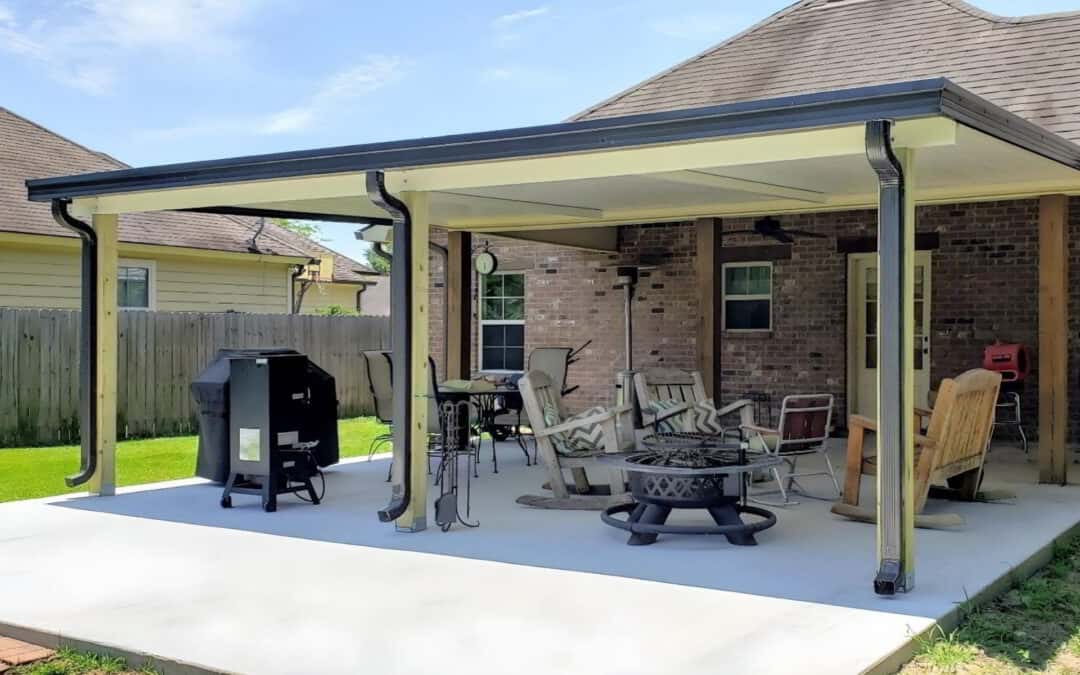
When it comes to choosing a patio cover, durability is often a top priority for homeowners. Aluminum patio covers stand out as the ideal choice for many reasons. Known for being low-maintenance, weather-resistant, and long-lasting, aluminum patio covers are quickly becoming one of the most popular options for outdoor shade structures. This article explores why aluminum patio covers are so durable, how they compare to other materials, and what makes them a smart investment for your outdoor space. Let’s dive into the key benefits and features that make aluminum patio covers a preferred option for durability.
Benefits of Aluminum Patio Covers
Aluminum patio covers offer a combination of strength, weather resistance, and relatively simple upkeep that works well for outdoor spaces. The National Park Service explains that aluminum quickly forms a tightly adherent oxide film that helps protect it from further chemical action, which contributes to its resistance to many atmospheric conditions. A roofer can inspect connections, fasteners, coatings, drainage points, and attachment areas to make sure the cover continues performing as intended. Service life still depends on installation quality, environmental exposure, finish condition, and maintenance rather than the metal alone.
- Weather Resistance: Aluminum naturally develops a protective oxide layer that helps resist many forms of atmospheric corrosion.
- Simple Upkeep: Routine cleaning and periodic inspection can help preserve the surface and connections.
- Long-Term Performance: Proper installation and control of moisture around fasteners and joints can support a longer service life.
Aluminum Patio Covers Resist Weather
Aluminum handles many outdoor conditions well, but proper drainage and compatible fasteners remain important when the material is exposed to rain, humidity, and changing temperatures. National Park Service guidance warns that standing water can encourage corrosion on aluminum, especially where galvanic reactions are possible. A roofer can check whether water drains freely from the cover and whether fasteners, flashing, and nearby materials are compatible with the aluminum system. Keeping water from collecting around seams and connections can reduce avoidable deterioration.
- Rain Exposure: Proper slope and drainage help keep standing water away from vulnerable joints.
- Metal Compatibility: Certain dissimilar metals can contribute to galvanic corrosion when moisture is present.
- Wind Performance: Posts, panels, and attachment points should be installed according to applicable structural requirements.
Longevity of Aluminum Patio Covers
Aluminum patio covers can provide years of service when coatings, connections, and drainage remain in good condition, but assigning one guaranteed lifespan to every installation would be misleading. The U.S. Department of Energy notes that crevice corrosion at aluminum and metal connections can weaken mechanical joints, illustrating why small connection details can influence the durability of outdoor aluminum assemblies. A roofer can look for corrosion around fasteners, movement at attachment points, coating damage, and signs that water is collecting where components meet. Periodic inspection becomes especially useful in humid or salt-exposed environments.
- Connection Care: Fasteners and joints should be checked for corrosion or movement.
- Finish Condition: Damaged coatings should be addressed before deterioration spreads.
- Drainage: Water should move away from seams and attachment areas rather than remain trapped.
Low Maintenance Aluminum Patio Covers
Aluminum patio covers generally require less surface treatment than unfinished wood, but they still benefit from routine cleaning and visual inspection. The U.S. General Services Administration recommends washing aluminum with mild soap, water, and a soft cloth or natural-bristle brush when ordinary dirt needs to be removed. A roofer can also inspect structural connections and roofline attachment points while the cover is being maintained. Aluminum offers another advantage around pests because the EPA identifies termites as insects that feed on wood and recommends metal barriers as one method of limiting termite access to structures.
- Routine Cleaning: Mild soap and water may be sufficient for ordinary surface dirt.
- Surface Protection: Avoid harsh cleaning methods that could damage protective finishes.
- Pest Resistance: Aluminum itself does not provide the wood food source that termites seek.
Aluminum Patio Covers and Corrosion Resistance
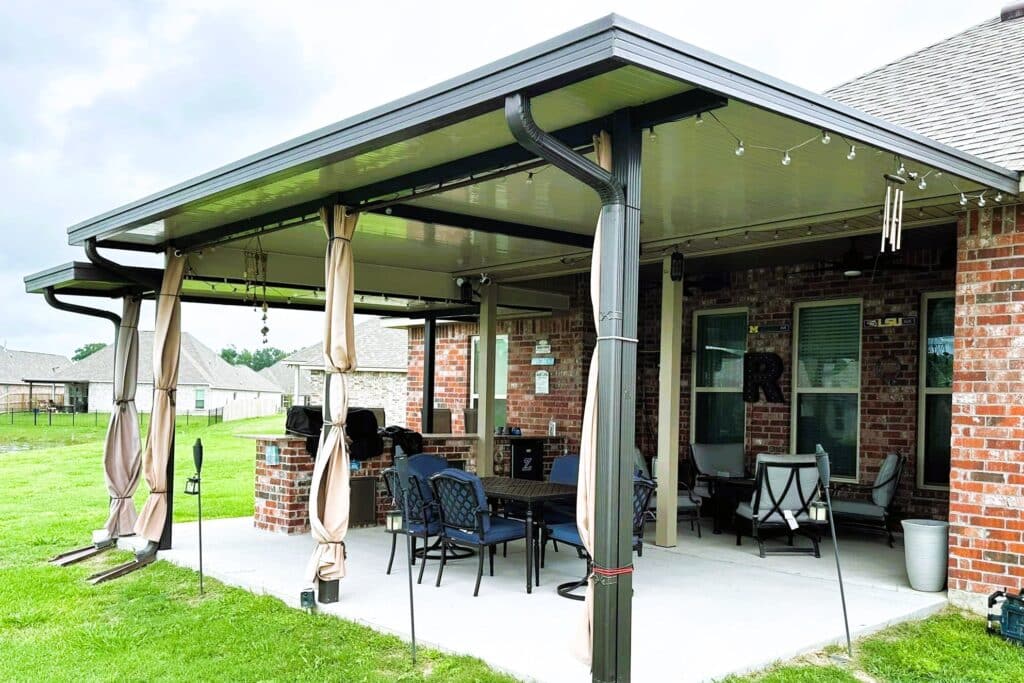
Aluminum patio covers resist the red rust associated with iron and steel, but the material is not completely immune to environmental corrosion. Research indexed by the U.S. Environmental Protection Agency found that 6061 aluminum showed greater corrosion susceptibility in a marine atmosphere than in an industrial atmosphere, with pitting becoming more severe under coastal exposure. A roofer can inspect panels, joints, fasteners, and finishes for early pitting or surface deterioration, especially on properties exposed to salty air. Routine rinsing and proper material selection can help limit deposits that remain on exposed aluminum surfaces.
- Rust Resistance: Aluminum does not develop the same iron-oxide rust associated with ordinary steel.
- Coastal Exposure: Marine conditions can increase the risk of pitting and other corrosion.
- Surface Care: Panels, finishes, and connection points should be checked periodically for deterioration.
Strength and Stability of Aluminum Patio Covers
Aluminum combines low weight with useful structural strength, which is one reason different aluminum alloys are used for building and engineering applications. Material information hosted by the National Institute of Standards and Technology states that aluminum has a density of about 2.7 grams per cubic centimeter, roughly one-third the density of steel, while some aluminum alloys can reach high strength levels. A roofer should still make sure posts, beams, connections, anchors, and panel spans are sized for the loads expected at the property because lightweight does not mean every aluminum component has the same capacity. Engineering, alloy choice, profile shape, and installation determine how the finished patio cover performs under wind and other loads.
- Low Weight: Aluminum weighs roughly one-third as much as steel by volume.
- Structural Potential: Aluminum alloys can combine low density with considerable strength.
- Proper Design: Beam spans, posts, anchors, and connections should match expected structural loads.
Eco-Friendly Durability of Aluminum Patio Covers
Aluminum can be recycled and returned to manufacturing streams, which can reduce the amount of energy associated with producing material from newly mined ore. The U.S. Department of Energy reports that producing aluminum from recycled material is typically about 95% more energy efficient than producing primary aluminum, requiring about 5% of the energy needed to make aluminum from bauxite. A roofer or patio-cover contractor can ask manufacturers about recycled content and product sourcing when environmental impact is part of the purchasing decision. Recycling potential does not replace durability considerations, so coating quality, construction, maintenance, and expected service conditions should still guide material selection.
- Lower Recycling Energy: Recycled aluminum can require far less production energy than primary aluminum.
- Material Recovery: Aluminum scrap can be returned to manufacturing rather than discarded.
- Product Research: Buyers can review recycled-content information alongside strength, finish, and warranty details.
Final Thoughts on Aluminum Patio Covers
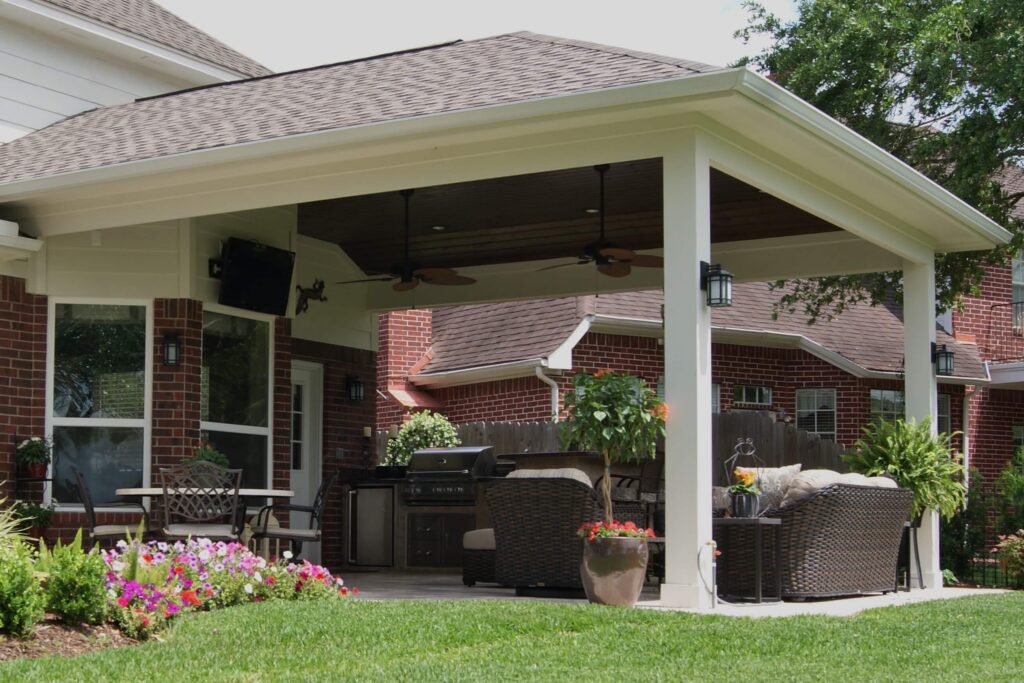
Aluminum patio covers offer a combination of durability, low maintenance, and environmental benefits that make them an ideal choice for homeowners. Their resistance to weather, longevity, and structural strength ensure that these covers provide lasting value and protection for your outdoor space. Aluminum’s corrosion resistance and low maintenance needs further enhance its appeal, making it a practical and sustainable option.
Key Takeaways for Aluminum Patio Covers
- Weather resistance: Aluminum withstands various weather conditions, making it a reliable choice for outdoor structures.
- Longevity: With proper care, aluminum patio covers can last for decades, providing excellent value.
- Low maintenance: Aluminum requires minimal upkeep, saving time and effort for homeowners.
- Corrosion resistance: Aluminum’s natural oxide layer protects it from rust and corrosion.
- Eco-friendly: Aluminum is recyclable, making it an environmentally sustainable choice.
Frequently Asked Questions About Aluminum Patio Covers
- How long do aluminum patio covers last?
- Aluminum patio covers can last 20-30 years or more with proper care.
- Do aluminum patio covers require painting?
- No, aluminum patio covers come with a finish that doesn’t need repainting.
- Are aluminum patio covers resistant to termites?
- Yes, aluminum is not susceptible to termite damage, unlike wood.
- Can aluminum patio covers withstand heavy snow?
- Yes, aluminum patio covers are strong and can support significant snow loads.
- Is aluminum an eco-friendly material for patio covers?
- Yes, aluminum is 100% recyclable and environmentally sustainable.
- About the Author
- Latest Posts
With over 30 years of experience, Advanced Roofing has established itself as a leading roofing contractor in the Northshore, Greater New Orleans area, and now South Mississippi. Specializing in both commercial and residential roofing, as well as vinyl siding and rain gutter installations, our reputation for quality and reliability extends across a wide range of remodeling and repair services.