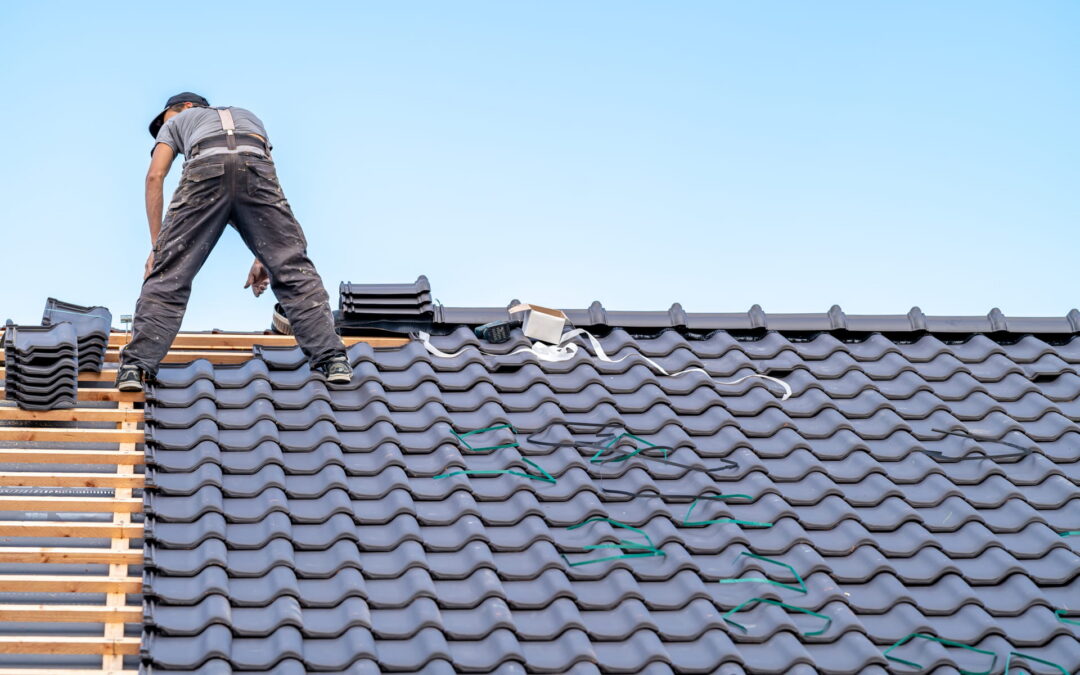
A roof installation exposes decking, penetrations, and drainage points hidden beneath the shingles. Roofers follow a sequence so each layer can be checked before the next one hides it. The process can reveal moisture damage or fastening trouble hidden from an estimate. Homeowners can expect preparation, tear-off, deck review, water control, shingle placement, and inspection.
- Preparation comes before removal.
- Concealed damage can change the scope.
- Each roofing layer serves a separate purpose.
Professional Roofers Installation Process
Crews begin by staging materials, setting access routes, protecting property, and arranging fall protection before tear-off starts. One jobsite example might involve moving vehicles, covering shrubs below an eave, placing a debris container nearby, and keeping a walking path clear. OSHA residential fall protection guidance states that construction workers six feet or more above lower levels generally need guardrails, safety nets, personal fall arrest systems, or another measure allowed by the rule.
- Driveways may need room for equipment.
- Patio items should leave drop zones.
- Fall protection belongs in the setup.
Old Roof Tear Off
Tear-off lets roofers inspect conditions beneath worn shingles. Crews remove roofing material, fasteners, and failed flashing while keeping debris away from windows and walkways. The EPA reports about 600 million tons of construction and demolition debris in 2018, including 15.1 million tons of asphalt shingles.
- Removal exposes the roof deck.
- Loose nails require collection during the job.
- Waste planning starts before stripping begins.
Roof Deck Damage Checks
Once the covering is gone, roofers can inspect sheathing for rot, holes, loose panels, and attachment concerns. FEMA roof wind guidance stresses deck attachment because the deck supports the layers installed above it. Repairs at this stage keep damaged wood from being covered.
- Weak sheathing should be repaired before covering.
- Panel edges can reveal movement.
- Photos can document conditions found during removal.
Roof Underlayment Installation
Underlayment goes over the deck before shingles and adds a water-shedding layer beneath the roof covering. FEMA roofing underlayment provisions list standards and attachment methods for asphalt shingles and other coverings. Crews must follow overlap and fastening requirements that match the chosen assembly.
- Lap direction affects water movement.
- Fastening depends on underlayment type.
- Eaves may need membrane protection under applicable requirements.
Roof Edge Flashing Details
Roof edges and penetrations need flashing because water can enter where materials meet. FEMA says drip edge belongs at eaves and rake edges of shingle roofs, while FEMA flashing guidance calls for flashing around plumbing vents, chimneys, exhaust caps, dormers, and skylights to integrate with shingles and underlayment. These junctions matter because shingles alone cannot seal an unfinished transition.
- Drip edge protects sheathing at the perimeter.
- Pipe penetrations need fitted flashing.
- Valleys demand careful detailing.
New Shingle Installation
Roofers establish starter courses near the lower edges and work upward while maintaining overlap and nail placement. FEMA’s code compilation says asphalt strip shingles need at least four fasteners per strip and notes that many manufacturers require six in high-wind applications. IBHS shingle installation information says product instructions should guide the pattern because designs differ.
- Starter strips help secure roof edges.
- Nail position affects attachment.
- Manufacturer directions can affect warranty coverage.

Roof Valleys And Ridges
Valleys carry runoff from intersecting roof planes, while ridge caps cover seams where slopes meet. Roofers arrange these areas so water has a defined path off the roof, and ridge work may connect with attic venting. FEMA flashing recommendations identify valleys and roof interruptions as locations that need weatherproofing attention.
- Valleys receive concentrated runoff.
- Ridge caps cover roof-plane joints.
- Vent openings should remain clear when part of the design.
Roof Ventilation Review
Replacement gives roofers access to ridge openings, soffit pathways, and exhaust penetrations. The U.S. Department of Energy attic guide calls moisture “the number one enemy facing an attic” and says it can warp the roof, damage insulation, and create problems in living spaces. The same guidance warns against venting dryers, bath fans, or kitchen exhaust into an attic.
- Moisture signs deserve investigation.
- Household exhaust should terminate outdoors.
- Wet insulation can signal water intrusion.
- Vent pathways must match the attic design.
Roof Installation Weather Planning
Weather can interrupt roof work while crews and materials remain exposed. The National Weather Service says, “If you can hear thunder, lightning is close enough to strike,” and tells workers to avoid rooftops, scaffolding, and ladders during thunderstorms. Crews may halt work when conditions become unsafe, as supported by National Weather Service jobsite lightning guidance.
- Thunderstorms can stop rooftop activity.
- Forecasts help crews plan exposed areas.
- Schedule changes can protect workers and the structure.
Homeowner Installation Expectations
Residents should expect noise, vibration, foot traffic overhead, and temporary limits near the work zone. Crews may suggest moving wall decorations and covering attic belongings because tear-off and fastening can shake dust or loose objects. Children and pets should stay outside marked work zones while equipment and debris are moving.
- Cars may need parking away from the house.
- Attic belongings can be covered beforehand.
- Pets may react to roofing noise.
Cleanup And Final Inspection
Cleanup continues as roofers collect packaging, shingle scraps, metal pieces, and fasteners. Crews can sweep for nails, then review flashing, vents, valleys, ridge caps, and edge metal. EPA asphalt shingle waste statistics show why disposal planning deserves a place in roofing work rather than being treated as an afterthought.
- Magnetic sweeps can locate stray fasteners.
- Transition points deserve a closing check.
- Project photos can preserve a record of repairs.
Roof Installation Perspective
A replacement roof works as a layered system, so shingles are only one part of its protection. Roofers have to connect deck condition, underlayment, flashing, perimeter details, fastening, valleys, ridges, and ventilation because trouble at one junction can weaken work elsewhere. OSHA safety rules, FEMA wind practices, DOE moisture guidance, EPA waste data, and National Weather Service storm advice show why roof installation combines craft, site control, and building science.
- Deck condition affects every layer above it.
- Water control depends on connected details.
- Fastening must suit the roof covering.
- Cleanup remains part of the job.
Roofers Installation Key Takeaways
Roofers do more during replacement than remove shingles and install another covering. The process moves through preparation, tear-off, deck inspection, underlayment, flashing, shingle placement, cleanup, and inspection. Homeowners who understand that order are better prepared for changes caused by uncovered damage or weather.
- Preparation supports access and debris control.
- Tear-off exposes the deck for inspection.
- Underlayment and flashing support water management.
- Shingles depend on correct fastening.
Roof Installation FAQs
How Long Does Roof Installation Take?
Project length depends on roof size, slope, material, crew needs, weather, and repairs found after tear-off. Roofers cannot always predict concealed deck damage before removal. A schedule can change once the structure is open for inspection.
Should Homeowners Leave During Installation?
Many residents remain home while roofing work is underway, though the process creates noise and vibration. People who work remotely or care for sound-sensitive pets may prefer another setting during tear-off. Crew access instructions should guide household movement.
What Can Roofers Replace?
Roofers may replace shingles, underlayment, flashing, pipe boots, vents, drip edge, ridge material, and damaged decking when the scope calls for those components. The items vary with roof design and conditions discovered during removal. Replacement should match documented need.
What Can Delay Roof Installation?
Rain, lightning, wind, concealed wood damage, supply problems, or permit requirements can alter a planned schedule. The National Weather Service directs outdoor workers away from rooftops and ladders when thunderstorms occur. NWS lightning safety guidance supports stopping exposed work when thunder signals danger.
How Do Roofers Protect Property?
Roofers can establish debris zones, shield landscaping, control material placement, keep access paths clear, and inspect the ground for discarded nails. Homeowners can help by relocating vehicles, grills, planters, and breakable items before work begins. Defined boundaries around the site reduce contact with debris and equipment.
- About the Author
- Latest Posts

With over 30 years of experience, Advanced Roofing has established itself as a leading roofing contractor in the Northshore, Greater New Orleans area, and now South Mississippi. Specializing in both commercial and residential roofing, as well as vinyl siding and rain gutter installations, our reputation for quality and reliability extends across a wide range of remodeling and repair services.